

Which Collar Do House Members Wear Their Congressional Pin?
House members wear their congressional pin on the lapel, not the collar. The pin is a small enamel badge that identifies a member to staff and the public. There isn’t a universal rule about shirt collars or ties – the pin’s job is visibility and recognition, and that happens best on the left lapel of a jacket.
The pin itself is a discreet emblem, and its exact design shifts with sessions and security needs. In practice, you’ll see members wearing it on the left side of a suit or blazer, rather than pinned to a shirt collar. If you’re trying to spot it in photos or on TV, look for a small, shiny badge sitting near the heart on the left chest area.
Key Takeaways

- Left-lapel placement. Pin on the left lapel of a suit jacket, about 1 inch from the heart, for quick recognition.
- Not on the collar. The pin goes on the jacket, not the shirt collar or tie.
- Design varies. Most pins depict the House seal or a flag motif; exact design changes with sessions.
- Consistency matters. Use the same spot during public appearances to build a recognizable look.
- Watch the spacing. Keep the pin area free from crowding by other badges or lapel pins.
What the pin is and why it exists
The congressional pin is an official badge worn by members of Congress and certain staff. Its purpose is twofold: it signals affiliation to colleagues and staffers during crowded Capitol events, and it provides a quick visual cue for security and ceremonial contexts. The practical takeaway for observers is simple: if you want to know who wears the pin, look at the left chest area on a jacket, not at the shirt collar.
For example, in formal settings you’ll frequently notice the pin resting near the wearer’s heart on the left lapel. In imaging, the badge tends to reflect official symbols like the House seal or a patriotic motif, which helps identifiers pop against business attire. Different sessions may introduce slight tweaks to the design, but placement remains consistent.
In practice, the pin’s visibility matters most during crowded events or media interactions. A pin placed correctly catches the eye in photos and on camera without requiring the viewer to search. The result is a clear, nonverbal cue of status and role.
How the pin is worn in daily life
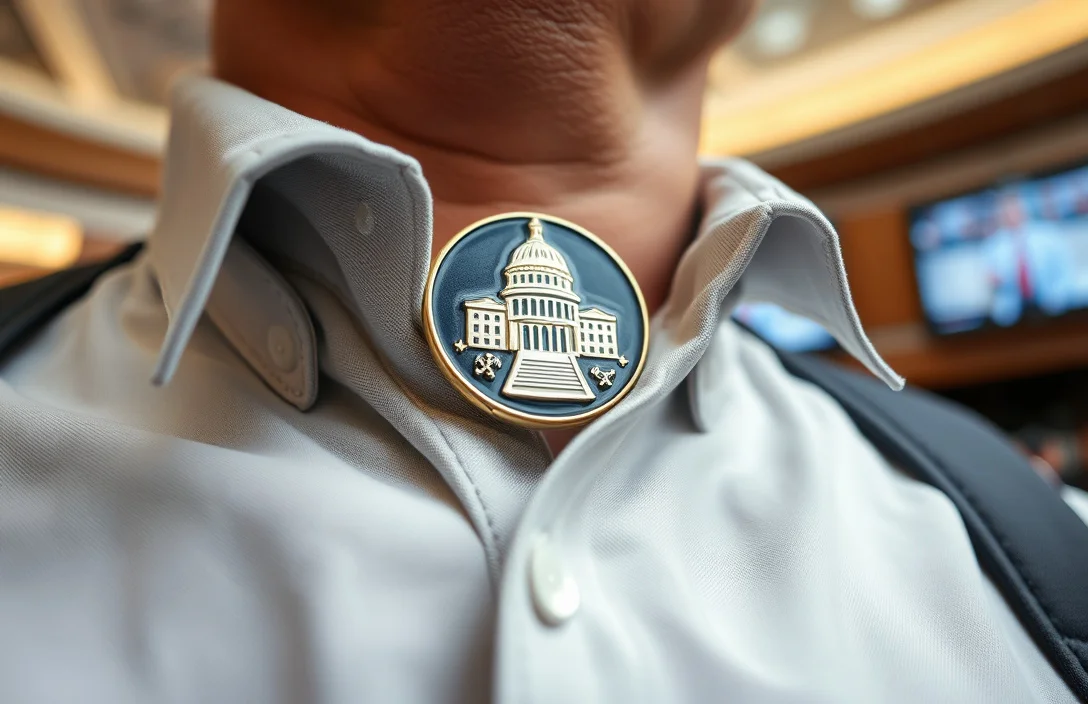
House members tailor their wardrobe choices to maintain consistent, recognizable visuals. The left-lapel approach works across kitchens, press rooms, and ceremonial halls because it’s naturally within the line of sight when speakers address crowds or take questions. The jacket lapel, not the collar, keeps the badge stable as the wearer moves, reducing the risk of the pin slipping or being obscured by a tie knot.
For many members, the pin sits at roughly the same vertical level as the heart. This consistency makes public appearances easier to interpret for constituents and journalists alike. When a member changes jackets, the pin typically moves with the garment, preserving the same spatial relationship to the chest area. In practice, this means the same placement strategy applies whether a member wears a solid blazer, a suit jacket, or a formal dress coat.
A common mistake is pinning the badge to a shirt collar or attempting to clip it to a tie. The left lapel is designed to carry the pin more securely and legibly, especially in photographed or televised moments. If you see a pin on a collar, it’s more likely a decorative accessory or a non-official badge, not the congressional pin itself.
Pin placements and best practices (quick reference)
| Placement | Typical location | Notes |
|---|---|---|
| – | – | – |
| Left lapel | On the left chest of a suit or blazer | Primary, most visible placement for the congressional pin. |
| Right lapel | Occasionally worn on the opposite side | Used when symmetry or attire structure dictates; less common. |
| Inside lapel | Hidden under the lapel edge | Rare; may occur for security or mic continuity, not standard. |
| Collar or tie | Not recommended | Collar pins are not the official congressional pin and can look off-brand. |
If you’re compiling a visual guide for press or a classroom, use the left-lapel image as the default reference. It’s the placement readers expect, and it minimizes misinterpretation during quick looks at photos or videos.
Design and how to tell them apart

Most congressional pins feature a recognizable symbol – either the House seal or a seal-like design that evokes constitutional authority. The exact motif changes with sessions, but the badge remains small, enamel-filled, and gold- or silver-toned. The key is scale and contrast: a pin that’s too large or sits awkwardly will draw attention away from the wearer’s message, so most members opt for a modest size that sits cleanly on the lapel.
When you see a pin in a photo, evaluate three things: is it on the left, is the design emblematic of congressional symbolism, and is the badge clearly visible without obstructing the wearer’s tie or shirt. These cues help distinguish a genuine congressional pin from a generic lapel pin or a novelty item.
For media teams, consistent pin use helps with on-camera continuity. A standardized placement allows quick, reliable cropping and close-ups during interviews or speeches. For viewers, it reinforces the wearer’s official role without distracting from the content.
Practical considerations for the general public
Public interest in congressional pins often centers on whether a member is in office or whether a particular delegation is represented. The pin’s presence can become a storytelling cue in photo essays or news segments, but it’s not a credential you can earn casually. Official pins are distributed to members and certain staff; the general public typically cannot obtain an exact official pin through standard channels. If you’re shopping for a pin as a keepsake or prop, you’ll find novelty versions that resemble the official style, but they aren’t the authentic credential.
In addition to the pin, remember that members’ appearance is part of a broader communication package. Wardrobe choices, grooming, and posture all contribute to how the pin is perceived. A pin on a well-fitted jacket, with a clean lapel line and minimal other accessories, reads as deliberate and professional rather than accidental.
For example, a member speaking at a committee hearing will often maintain a consistent left-lapel pin position as cameras pan across the dais. The visual cue supports the message by reinforcing the wearer’s official capacity without demanding attention. That balance – subtle badge, steady presence – defines the practical use of the congressional pin in public life.
The bottom line and what to do next
If you want to identify a member in a photo or on television, look for the left lapel pin on the jacket. The collar is not the place for the congressional badge, and the pin’s design will reflect official symbolism rather than fashion alone. For observers, this simple rule makes quick judgments possible without getting bogged down in minutiae.
If you’re curious about the pin for research or journalism, focus on placement, design cues, and consistency across appearances. Understanding these elements helps you interpret images and videos more accurately, without needing to chase every variant of the badge.
FAQ
What exactly is the congressional pin used for?
The pin identifies membership in Congress and is typically worn on the left lapel for quick recognition during events, photos, and media appearances.
Do all members wear the pin the same way?
Yes, the typical placement is the left lapel of a suit or blazer; collars and ties are not standard for the official pin.
Can the public buy an official congressional pin?
Official pins are issued to members and certain staff; the general public usually cannot purchase the exact official pin, though novelty versions exist.
How can you tell if a pin is authentic?
Authentic pins usually sit on the left lapel, feature official symbols, and have a discreet, formally toned design; fake pins often look oversized or misaligned.
Are there different designs for different sessions or parties?
The basic purpose remains the same, but pin designs can vary with sessions and security needs, while placement stays consistent on the left lapel.