

How To Use A Mans Collar Pin? In 7 Easy Steps
A collar pin finishes a dress shirt by pinning the collar points together and lifting the knot of the tie, creating a clean, high-contrast line. Choose a shirt with stiff collar points and eyelets designed for a pin, ensuring the collar can handle the pin’s weight without sagging. The pin length should match the gap between the points, typically 1.5 to 2 inches. If the shirt isn’t built for it, the pin will poke or pull.
A collar pin goes through the two collar points to keep them aligned and elevate the knot. The pin should pass through small holes or eyelets and be secured by a backing or clip.
Key Takeaways
- Right shirt compatibility: Use a dress shirt with sturdy collar points and proper eyelets designed for pin wear.
- Pin length matters: Match the gap between collar points, usually 1.5-2 inches, to avoid bending or sagging.
- Placement governs look: Position the pin about the center of the collar height to lift the knot without pulling fabric.
- Secure backing is essential: Always use a backing or clip to prevent the pin from loosening or snagging.
- Careful removal saves fabric: Remove slowly and lift the knot to ease tension on the collar and tie fabric.
What a collar pin is and when to wear it
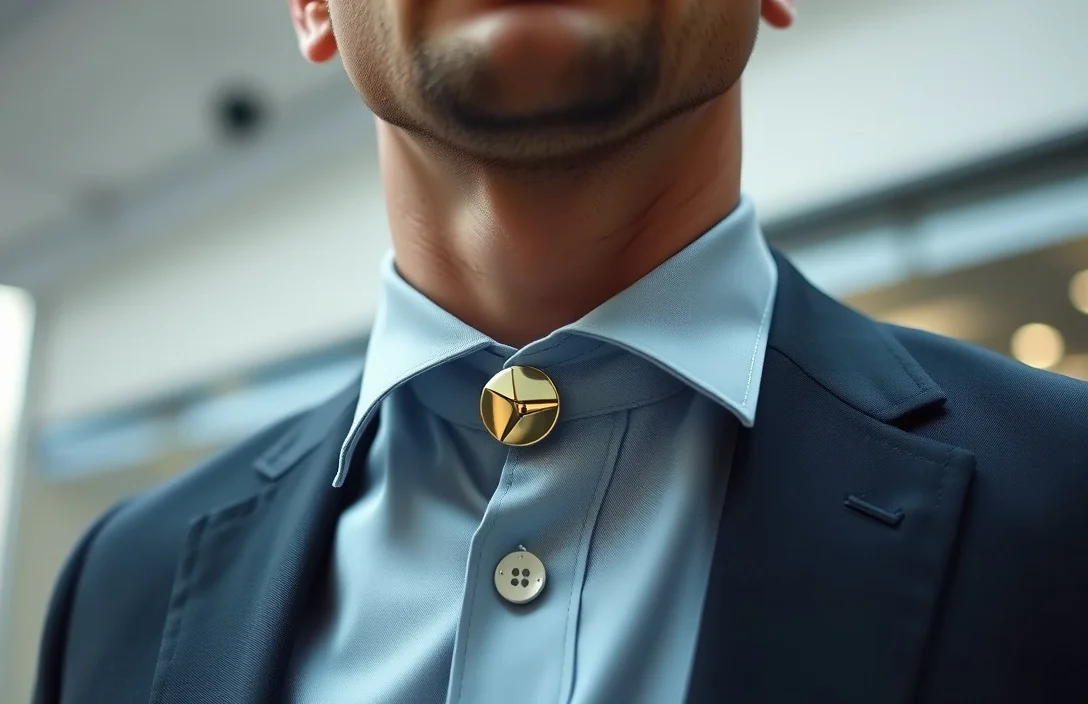
A collar pin is a small metal bar with a head on one end that passes through holes or eyelets near the base of each collar point. Its dual purpose is to lock the points in place and lift the tie knot slightly, creating a deliberate, high-contrast line beneath the shirt front. This accessory shines in formal settings, especially with single or double-breasted suits and crisp, tailored shirts.
Wear a collar pin when aiming for a clean, classic aesthetic without bulk around the neck. It pairs well with traditional or spread collars and a standard necktie. Avoid it with casual or soft-point collars, or shirts lacking reinforced eyelets, as the pin can bend or tear fabric. Be cautious with newer collars or very light fabrics, as the pin can leave impressions or create uneven tension.
A collar pin complements a tie that sits flush and symmetric under the chin, adding subtle height to the knot for a compact, precise appearance. Test it in a mirror at home before attending a formal event. If you notice strain on the collar points, you’re likely forcing the pin in the wrong place or using an improper length.
Prerequisites and gear you’ll need
A shirt that supports a pin and a correctly sized collar pin are essential. Look for a pin with a smooth head and a clean backing or secure clip. The backing prevents shifting and snagging on other garments. If the shirt lacks eyelets or the points wobble, skip the pin and opt for a collar clip or another solution.
Your gear checklist should include:
- A collar pin that matches your collar gap (typically 1.5-2 inches for standard dress shirts).
- A backing or clip designed for the pin you’re using.
- A shirt with reinforced collar points and properly positioned eyelets.
- A mirror for precise alignment to avoid fabric damage during insertion.
For best results, pair the collar pin with a standard-width necktie. A pin that’s too long or short looks awkward and can pull the fabric. If unsure about eyelet durability, practice on a spare shirt first. Aim for a crisp, elevated line without damaging the collar.
Types of collar pins (and what they mean for you)
- Traditional through-the-collar pin: Inserts through corresponding holes in both collar points and sits flush against the tie.
- Clip-on collar pin: Uses a built-in clip to hold the collar without piercing the fabric.
- Magnetic or non-piercing variants: Rely on a magnetic backing or friction clip; gentler on delicate fabrics but can shift with movement.
Here’s a quick comparison to help you choose.
| Type | Best for | Pros | Cons | Typical cost |
|---|---|---|---|---|
| Traditional through-the-collar | Heavier fabrics and classic looks | Secure hold; tall, clean line | Requires pre-cut holes; risk of fabric wear | $15-$40 |
| Clip-on collar pin | Delicate fabrics; quick on/off | Non-piercing; flexible | Can slip; less formal look | $8-$25 |
| Magnetic or non-piercing | Very light fabrics; minimal drama | Easy removal; gentle | Movement can loosen; needs compatible shirt | $10-$30 |
If you’re new to collar pins, start with a clip-on or magnetic variant to build confidence. Once comfortable, transition to a traditional through-the-collar pin for a more authentic finish.
how to use a collar pin

Ensure the collar points are clean and dry. Lint or moisture can affect alignment and leave marks on your tie. The goal is stability that lasts through the event.
- Measure and confirm the gap: Hold the shirt collar flat and measure the distance between the tips. If the gap is 1.5 to 2 inches, you’ve got a standard fit for a traditional pin.
- Choose the pin length: Select a pin length that matches the gap, ensuring it passes cleanly through both collar points without excess protrusion.
- Align the points: With the collar laid flat, position the points symmetrically. The pin should cross the fabric between the two points, not toward the tie or collar edge.
- Insert the pin: Gently push the pin through the first eyelet, then through the second, until snug against the inner collar surface. Don’t force it; stop if you feel resistance.
- Secure the backing: Attach the backing or clip on the opposite side of the fabric. The backing should grip firmly without puckering.
- Check symmetry and tension: Verify the knot height in the mirror, ensuring it’s comfortably elevated, not pressed into the neck. If uneven or pulling, adjust the pin’s alignment.
- Test movement: Move your head through a normal range of motion. If the pin shifts or feels loose, you need a different length or a stronger backing.
For example, wearing a navy wool suit with a white spread-collar shirt and a standard 2.0-inch pin creates a sharp line under a medium-width tie. A properly aligned pin keeps the collar points from spreading while maintaining comfort throughout the event.
For non-traditional collars or shirts without reinforced eyelets, stop here. Forcing a pin into soft fabric can cause tears or puckers. In such cases, switch to a collar clip or a non-piercing option.
Common mistakes and troubleshooting
Mistakes show up quickly, particularly misalignment, pin length mismatch, and forgetting to secure the backing. Start with a practice run on a spare shirt to ensure the feel and look are right.
- Misalignment: If the collar points don’t line up with the tie, the knot looks off. Fix by repositioning the pin and checking symmetry in the mirror.
- Pin too long or too short: A pin that doesn’t sit flush can poke the tie or neck. Swap to a length that matches the gap precisely and retest.
- No backing or clip: The pin can slip or snag. Always secure with the backing; if the fabric is slippery, use a stronger clip.
- Damaging delicate fabrics: Some shirts can’t handle a through-the-collar pin. Move to a clip-on or magnetic alternative to avoid fabric damage.
- Wearing with the wrong tie width: If the tie is too wide or narrow, the knot sits awkwardly under the pin. Match tie width to the collar height for balance.
The quickest fix for a pin that won’t stay in place is to switch to a non-piercing option. If you’re set on a traditional pin, use a well-stitched shirt with reinforced eyelets, and double-check collar stiffness before insertion.
Styling ideas and real-world use cases

A collar pin works best with classic tailoring and a well-fitted shirt. It’s a statement piece that signals formality without adding bulk. Use it for weddings, black-tie optional events, and formal dinners where a precise, clean line is desired.
- Traditional business formal: Navy suit, crisp white spread collar, and a medium-gray tie. The pin height aligns the knot slightly above the collar line for a taller silhouette.
- Evening events: Charcoal suit with a blue shirt; a subtle, low-contrast pin creates a refined profile under the knot.
- Modern formal with a twist: A black tie on a white shirt looks striking with a mid-size pin that highlights the collar’s edges without overpowering the knot.
Outfit ideas:
- Navy suit, white spread collar, and a slim charcoal tie with a traditional through-the-collar pin.
- Charcoal suit, light-blue shirt, and a medium-width tie with a clip-on collar pin for quick on/off.
- Black-tie optional look: Black suit, white wingtip collar, and a tie bar-style pin for a sharper finish.
Care, maintenance, and safety
A collar pin is metal, not a fabric lever. Clean it after wearing to prevent rust and staining. Wipe with a microfiber cloth and store in a small jewelry pouch or case to prevent scratches and loss.
Collar pins can cause fabric wear if used aggressively or on weak shirts. If you notice loose stitching or eyelets, stop using the pin and switch to a clip-on option. For seasonal wear, rotate between collar pins and clips to distribute wear and extend the life of both the shirt and accessory.
Safety matters: never press a pin too hard through a tight eyelet; always align with the center of the collar surface. If you have sensitive skin, test wear for a short period to ensure there’s no irritation.
Alternatives to collar pins
If your shirt or style doesn’t support a traditional pin, collar clips offer a similar structural effect without piercing the fabric. A modern alternative is a stiffened collar stay with a subtle pin mechanism, reducing movement while keeping a neat tie line. For some outfits, a well-chosen tie pin or bar can serve a similar purpose with a slightly different silhouette.
When evaluating alternatives, consider fabric weight, collar stiffness, and event duration. For everyday wear, clips or stay-based solutions are safer and simpler. For formal occasions, a traditional pin can deliver a more refined look if the shirt supports it.
Practical verdict and next
A collar pin can elevate a classic dress shirt for a clean, commanding line under the knot. Start with a clip-on or magnetic option to learn the feel and fit; then move to a traditional through-the-collar pin on a shirt with sturdy eyelets. Practice helps avoid fabric wear and misalignment, tailoring the look to your body and wardrobe.
Next steps: check your shirts for eyelets and collar rigidity, pick a pin length that matches your collar gap, and do a dry run at home before any formal event. If the look feels too stiff, switch to a collar clip and save the pin for occasions where a stronger statement is desired.
FAQ
How do I know if my shirt supports a collar pin?
A shirt supports a collar pin when the collar points have reinforced eyelets that line up to accept the pin cleanly. If you cannot find holes or feel the fabric strain during testing, use a collar clip instead.
Can I wear a collar pin with any tie?
Collar pins pair best with standard-width ties and well-fitted dress shirts. Narrow or very wide ties can disrupt balance, so match the tie width to the collar height for a cleaner look.
What’s the safest way to remove a collar pin?
Gently rotate the pin to release it from the eyelets, then pull it straight out. Avoid twisting hard, which can stretch the eyelets or tear the fabric.
How do I avoid damaging my shirt with a collar pin?
Choose a pin that matches the collar gap, use backing, and avoid forcing the pin through fabric that feels stiff or has weak eyelets. For delicate fabrics, prefer non-piercing clips.
Is a collar pin appropriate for business settings?
Yes, in conservative business environments with traditional tailoring. It signals attention to detail, but gauge the event’s formality and the shirt’s compatibility before wearing. If unsure, test at home first.